
You've Got Design Taste, Here's How to Harness it
I recently had the pleasure of doing a day of design work on the website of film director Charlotte Evans. Clients can request any kind of help under Superpixel, aka my designer-for-a-day service, and Charlotte asked if I could redesign her Squarespace portfolio.
Here’s how the project turned out:


Her old site was built on Squarespace’s Avenue template and essentially stuck to the grid layout and black-on-white colour palette of the template. Here’s how her website looked before:


Alas, I didn’t grab a screenshot of her main page before I upgraded the site from Squarespace 7.0 to 7.1. But essentially, it looked very similar to this:

The Avenue template in Squarespace 7.0
Charlotte loved the finished design. Reflecting afterwards, I think the reason the project succeeded is that we identified what her design taste was during the preparation process.
Once we found it together, Charlotte knew it, I knew it. From there, every creative decision I made was rooted in her taste.
But without clearly knowing her taste beforehand, I don’t know if I would’ve been able to pull off a speedy site redesign in an 8-hour day! When designing a website, your personal taste significantly shapes the final look and feel of your website.
Okay, but first, what is taste?
Taste in design refers to an individual's or a group's preference for a particular aesthetic, style, or approach in design.
No surprises. Taste is subjective, differing from person to person. And that’s the thing — everyone inherently has taste. Design taste is dynamic and evolving, shaped by factors, like your personal experiences, cultural background, and technological advancements.
Even if you doubt your own design abilities, I do believe you have design taste. What's more, you can harness it to design your website faster and smarter. But firstly, you must tap into it.
Identifying Your Personal Taste in Design
Identifying your taste in web design can be a tricky task, but well worth the time investment when it comes to web design!
One way to identify your taste is by exploring and observing the designs of existing websites and other design products, e.g. posters and branding. Take note of what elements and styles you are drawn to and what you find visually appealing.
Another practical exercise that I highly recommend is to create a mood board or collection of designs that you like and identify common themes and patterns among them. This is what I did with Charlotte.
My client didn't know going into the project how she wanted her redesigned website to look and function. One of the homework tasks I set Charlotte in the prep stage was to create a Pinterest inspiration board. Later, she told me that getting her to create that mood board was super helpful!
It was the mood board that revealed, to my client, her own design preferences.
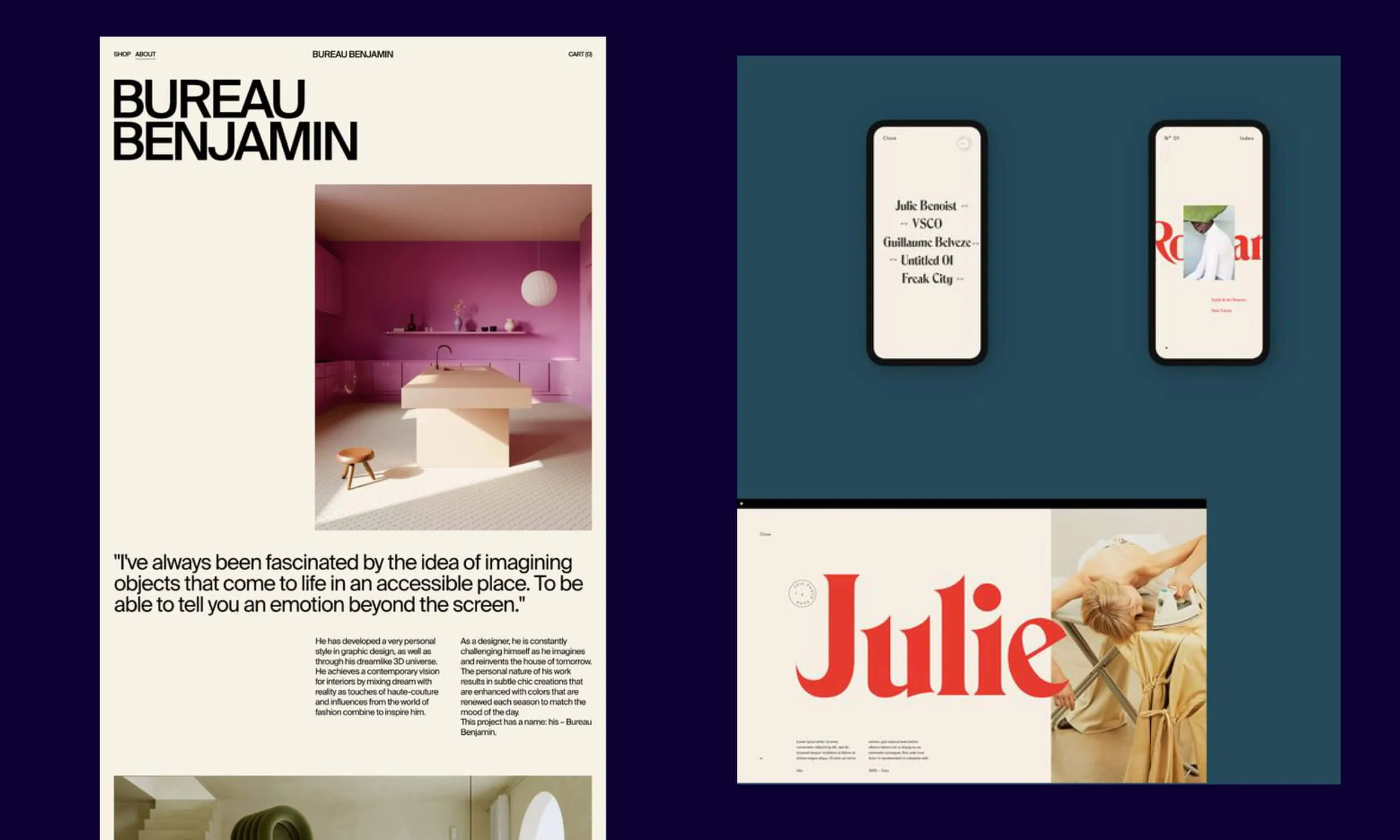
Examples of websites that my client pinned to her Pinterest board.
Taste can be difficult to define because it’s… kinda instinctual. When you’re pinning visual ideas with a tool like Pinterest, you’re tapping into your taste without having to think about it. You’re going, “Ooh, I like that,” and reacting to a design on an emotional level.
But later, when you review your mood board as a whole, you can begin to identify your own preferences in colours, fonts, and other stylistic elements that emerge.
Harnessing Your Personal Taste in Design
Once you’ve identified your personal taste in web design, it’s sooo much easier to develop your personal brand in the design of your site. One way you can do this is by bringing in your favourite elements from your mood board into your website design.
The overall mood/vibe of a website is heavily influenced by its selection of colours, fonts, images, and videos.
For non-designers, I’d suggest starting with colour as an easy way to apply your taste to your site. After that, go ahead and tackle fonts.
Looking at Charlotte's new site, you can see that I picked a red-orange colour (#F54500) for the text. And yet, during our first call, Charlotte said she didn’t like red and explicitly asked me to avoid it.

So what changed? We both noticed that red typography kept cropping up in the references on her Pinterest inspiration board.
I drilled down into her preferences by asking her questions. We uncovered that while she didn’t like what I like to call ‘fast-food’ red, she was drawn to how striking the warm red-orange looked against complimentary, pastel backgrounds, some of my client's favourite colours.


Some images that my client pinned to her mood board revealing the colour red.
What’s more, I felt comfortable heading into bold colour territory in the redesign because it reflected Charlotte’s own directing taste and body of work. She is a director who tries to push conventional storytelling boundaries in a visually striking and compelling way.
By incorporating her taste into my design, Charlotte’s portfolio is a much better reflection of her directing style and voice than her old site, helping her to build trust with her audience.

Colour inspiration that I pinned to the client's Pinterest board based on her taste.
Ready to level up your Squarespace website even further? Leave your website in expert hands.
Another truth about taste is that a gap may exist between your taste and your abilities.
And this applies really to any creative field of work. A quote that has been deeply encouraging to me as a creative are the words of Ira Glass, host and producer of This American Life. You may have come across them before:
“All of us who do creative work, we get into it because we have good taste. But there is this gap. For the first couple years you make stuff, it’s just not that good. It’s trying to be good, it has potential, but it’s not. But your taste, the thing that got you into the game, is still killer.”
It's perfectly okay to find a gap between your taste and skills in web design. If that's the case, you may wish to engage a web designer. Find a designer who will take the time to understand your tastes and has the design skills to bridge that gap for you.
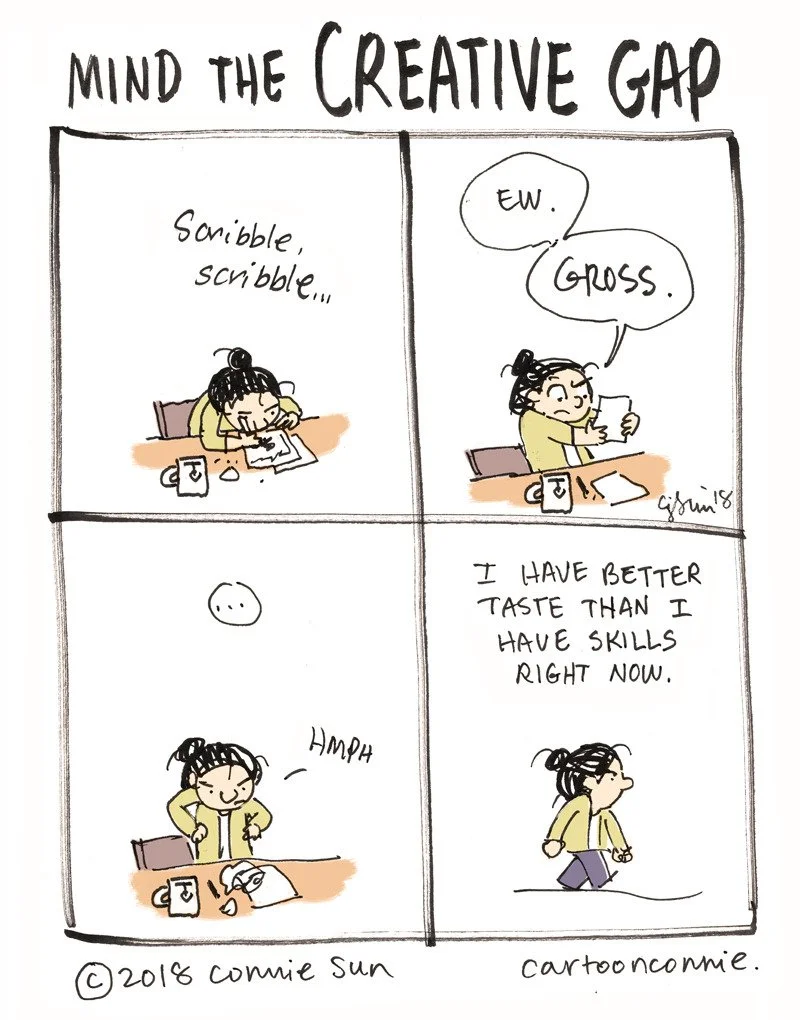
Source: Cartoon Connie on tumblr
Wrapping Up
So if you’re creating your own site, but you’re stuck on the design, don’t give up! You may not have pinpointed your design taste, aka your design compass, just yet. I’d encourage you to create your own website inspiration board using Pinterest or another tool of your choice to gather design examples that resonate with you on an emotional level. Then, look for patterns across your mood board.
Creating a site that reflects your personal taste can help you stand out in a crowded field and connect with audiences and clients who share similar tastes with you.
For help on how to make an inspiration board with Pinterest, here’s the info I give my clients.
In the digital age, your website is often the first point of contact for potential customers. It's your online shop front, your virtual business card, and a reflection of your brand identity.
If you need help harnessing your tastes into a functional, attractive site, Tempixel Design offers comprehensive web design packages and designer-for-a-day services to help you create an online presence that truly reflects your brand and resonates with your audience.

